
Introduction: Why Japan Experiences Frequent Earthquakes
Japan, a country admired for its technological brilliance and cultural heritage, also stands on one of the world’s most active seismic zones. The phenomenon of Japan Earthquakes isn’t merely a natural occurrence; it’s a defining element of the nation’s geography, lifestyle, and policy. Each year, Japan experiences thousands of tremors—some barely noticeable, others devastating. Understanding why these quakes occur and how Japan has evolved to mitigate their impact is essential to appreciate the nation’s resilience.
Nestled along the Pacific “Ring of Fire,” Japan is a meeting point of four major tectonic plates — the Pacific, Philippine Sea, Eurasian, and North American plates. Their constant collision and movement beneath Japan’s surface create the perfect conditions for frequent seismic activity.
Geological Overview of Japan’s Seismic Activity ( Japan Earthquakes )
The Pacific Ring of Fire and Its Influence on Japan
Japan lies on the Pacific Ring of Fire, a horseshoe-shaped area renowned for its volcanic eruptions and earthquakes. This zone encircles the Pacific Ocean and hosts around 75% of the world’s active volcanoes. The tectonic stress generated in this region constantly reshapes Japan’s landscape.
Tectonic Plates Beneath Japan
Four powerful plates interact beneath Japan’s islands. The Pacific Plate slides under the North American Plate, while the Philippine Sea Plate subducts beneath the Eurasian Plate. This subduction causes immense pressure to build until it’s released as an earthquake.
History of Major Earthquakes in Japan ( Japan earthquake history
)
The Great Kanto Earthquake (1923)
Striking the Tokyo-Yokohama area, this 7.9-magnitude earthquake remains one of Japan’s deadliest. Over 140,000 people lost their lives, and massive fires devastated the capital. It marked a turning point in Japan’s urban safety and reconstruction strategies.
The 1995 Kobe Earthquake (Great Hanshin)
The Great Hanshin Earthquake shook Kobe and surrounding areas with a magnitude of 6.9, killing over 6,400 people. This tragedy exposed weaknesses in infrastructure and disaster response systems, prompting reforms in emergency management.
The 2011 Tohoku Earthquake and Tsunami ( 2011 Japan earthquake and tsunami )
On March 11, 2011, Japan faced one of the most powerful earthquakes ever recorded (magnitude 9.0). The resulting tsunami caused catastrophic damage and triggered the Fukushima Daiichi nuclear disaster. This event reshaped Japan’s disaster management strategies and global nuclear safety standards.
Recent Earthquakes in Japan: Trends and Statistics ( Seismic activity in Japan
)
Modern data shows that Japan experiences about 1,500 noticeable earthquakes each year. Although most are minor, several moderate quakes occur monthly. Advanced monitoring technologies and seismic research centers constantly track these tremors, allowing early warnings to minimize damage.
The Impact of Earthquakes on Japan’s Economy and Infrastructure
Economic Losses and Recovery Efforts
Japan’s robust economy often faces setbacks following major earthquakes. The 2011 Tohoku event alone caused losses exceeding $200 billion. Yet, Japan’s swift recovery, driven by public resilience and government support, exemplifies its preparedness.
Infrastructure Resilience and Rebuilding Programs
Post-disaster reconstruction focuses on sustainability. Japan invests heavily in earthquake-resistant bridges, transportation networks, and public utilities designed to endure strong tremors. Urban redevelopment projects in Tokyo and Sendai showcase cutting-edge resilience strategies.
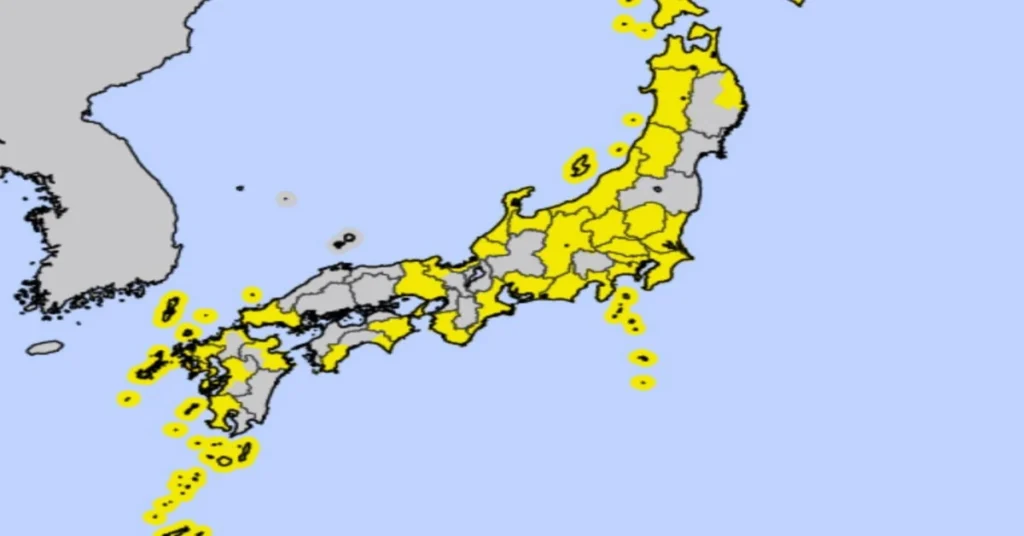
Recent Event: Northern Japan Quake (Nov 9, 2025)

- A magnitude 6.9 earthquake struck off the coast of Iwate Prefecture in northeastern Honshu at 5:03 p.m. local time on Sunday. euronews+3AP News+3The Japan Times+3
- The quake had an initial depth of around 16 km (some reports say ~10 km). AP News+1
- A tsunami advisory was issued for the region, with potential wave heights initially estimated up to 1 metre (3 ft) or more; later actual measured waves were around 10-20 cm in some coastal spots (Ofunato, Kuji). CBS News+2mint+2
- The advisory was cancelled after a few hours once confirmed wave heights remained small and no major damage was reported. AP News+1
- Fortunately, there were no immediate reports of injuries, major damage, or nuclear plant irregularities. euronews+1
- Authorities warned of possible strong aftershocks in the coming days, given the tectonic setting. The Japan Times
Why this matters:
- This recent quake is a reminder of Japan’s constant seismic risk, reinforcing the relevance of preparedness, monitoring, and resilient infrastructure.
- Although this specific event did not lead to large damage, the location (off Iwate, part of the Pacific “Ring of Fire” region) is one where historical major quakes and tsunamis have occurred, so scientists and authorities remain vigilant.
- The quick response (issuing and then cancelling tsunami alerts) shows Japan’s systems are functioning—but also that vigilance cannot be relaxed, especially for aftershocks.
Japan’s Earthquake Preparedness and Response Systems
Japan is widely recognized as a global leader in earthquake preparedness. The country’s approach blends technology, education, and community engagement, ensuring citizens know exactly what to do before, during, and after an earthquake.
The Earthquake Early Warning System (EEW)
Japan’s Earthquake Early Warning (EEW) system, launched by the Japan Meteorological Agency (JMA), is among the most advanced in the world. It detects initial seismic waves (P-waves) before the destructive waves (S-waves) arrive. This system allows citizens, train operators, factories, and schools to receive alerts within seconds of an impending quake.
During the 2025 Iwate Prefecture quake, the EEW successfully alerted millions through smartphone notifications, TV broadcasts, and public sirens. These warnings, even if only a few seconds long, help people take protective actions—such as turning off gas lines, stopping trains, and moving to safe zones.
National Disaster Management Agencies and Training
Japan’s Cabinet Office for Disaster Management oversees nationwide readiness efforts. Every year, on September 1st (Disaster Prevention Day), millions participate in earthquake drills simulating real conditions. Local governments, schools, and workplaces coordinate these exercises, ensuring every citizen is aware of safety procedures.
Moreover, Japan’s Fire and Disaster Management Agency (FDMA) operates around the clock, providing emergency services, rescue operations, and post-quake recovery assistance.

Earthquake-Resistant Architecture and Engineering Innovations
Seismic-Resistant Building Technologies in Japan
Japan’s architectural marvels aren’t just visually impressive—they’re engineered for survival. Most modern Japanese skyscrapers incorporate base isolation systems, where buildings are placed on flexible bearings that absorb seismic shocks. Structures like the Tokyo Skytree and Roppongi Hills Mori Tower stand as testaments to these innovations.
Some buildings also use active damping systems, which detect tremors and counteract vibrations through mechanical adjustments. This technology minimizes swaying, preventing structural collapse during strong earthquakes.
Role of Architects and Engineers in Disaster Prevention ( Japan Earthquakes )
Japanese architects and engineers play a critical role in shaping a resilient nation. They work under strict Building Standard Laws, which are updated after every major earthquake. Engineers also collaborate with government agencies and research centers like the National Research Institute for Earth Science and Disaster Resilience (NIED) to develop next-generation seismic designs.
Community-focused infrastructure—like earthquake-resistant schools, hospitals, and evacuation shelters—demonstrates Japan’s forward-thinking approach to safety.
Public Awareness and Education Campaigns in Japan ( Japan Earthquakes )
Community Drills and Preparedness Training
From children to senior citizens, every Japanese resident is familiar with earthquake drills. Schools regularly conduct “duck, cover, and hold” exercises. Local governments distribute emergency kits and guidebooks explaining what to do during disasters. Public TV channels even run educational programs on earthquake preparedness.
The Role of Schools in Earthquake Education
Japan’s education system integrates disaster awareness from an early age. Students learn about tectonic activity, participate in safety drills, and practice evacuation procedures. This consistent training has made Japan’s population among the most disciplined in responding to natural disasters.
Environmental and Social Consequences of Earthquakes ( Japan Earthquakes )
Earthquakes in Japan can reshape coastlines, trigger landslides, and disturb marine ecosystems. The 2011 Tohoku earthquake altered the seabed by several meters, releasing massive energy into the ocean. Socially, earthquakes also leave lasting trauma, especially in regions where families lose homes or livelihoods. Japan’s post-trauma care programs and community rebuilding projects aim to heal both infrastructure and hearts.
Lessons Learned from Past Earthquakes
Each major earthquake has left invaluable lessons for Japan:
- 1923 Kanto Earthquake: Importance of fire prevention and city planning.
- 1995 Kobe Earthquake: Need for stronger infrastructure and coordination between rescue teams.
- 2011 Tohoku Earthquake: Necessity of tsunami barriers, nuclear safety protocols, and improved evacuation routes.
Japan applies these lessons through constant reforms, ensuring no tragedy goes unlearned.
How Japan’s Technology Helps Predict and Mitigate Earthquake Damage ( Japan Earthquakes )
Japan invests heavily in seismic research, AI-based prediction models, and satellite monitoring. The Hi-net (High Sensitivity Seismograph Network) records tremors nationwide, offering real-time data for analysis. Artificial intelligence now helps forecast aftershock patterns, while drones and robots assist in post-disaster search and rescue missions.
Global Lessons: What Other Nations Can Learn from Japan
Countries such as Indonesia, Chile, and Turkey have adopted elements of Japan’s preparedness strategies. The emphasis on public education, strict construction laws, and early warning systems serves as a model for other earthquake-prone nations. Japan demonstrates that preparedness is not an option—it’s a necessity.
Future Outlook: Can Japan Ever Be Earthquake-Proof? ( Japan Earthquakes )
While it’s impossible to stop earthquakes, Japan continues striving toward a disaster-proof society. With advancements in materials science, AI, and urban design, the goal is to minimize loss of life and property to near zero. Japan’s continuous evolution from past disasters shows that resilience isn’t built overnight—it’s a lifelong commitment.( Japan Earthquakes )
Frequently Asked Questions (FAQs) ( Japan Earthquakes )
1. Why does Japan experience so many earthquakes?
Japan sits on the convergence of four tectonic plates, making it one of the world’s most seismically active regions.
2. What was the most powerful earthquake in Japan’s history?
The 2011 Tohoku earthquake (magnitude 9.0) is the strongest recorded in Japan, leading to a devastating tsunami and nuclear crisis.
3. How does Japan’s early warning system work?
It detects the first, less damaging waves and sends alerts before the destructive waves arrive, providing a few seconds of warning.
4. Are Japan’s buildings earthquake-proof?
No building is 100% earthquake-proof, but modern Japanese structures are designed to resist collapse even during severe tremors.
5. How often do major earthquakes occur in Japan?
On average, Japan experiences one major (magnitude 6+) earthquake every few months, though most cause minimal damage due to strict safety standards.
6. What can tourists do during an earthquake in Japan?
Stay calm, move away from windows, and follow local evacuation instructions. Most hotels have emergency kits and safety guidance in multiple languages.
Conclusion: Building a Safer Future in Seismic Japan ( Japan Earthquakes )
Japan’s relationship with earthquakes is both challenging and inspiring. The nation has transformed frequent natural disasters into opportunities for innovation, education, and resilience. From advanced warning systems to resilient architecture, Japan continues to show the world that even in the face of nature’s power, preparation and unity can save lives.( Japan Earthquakes )